Sailboats in La Paz: Fleet Types, Specs, and Cruising Layouts
- gobaja sailing
- May 13
- 7 min read

What does the “right” cruising sailboat actually look like once you spend several nights aboard instead of just touring it at the dock?
That question sits behind much of the growing interest surrounding Sailboats La Paz, where sailors increasingly search for vessel layouts, liveaboard capabilities, and real-world cruising functionality rather than simple vacation experiences.
Unlike generic travel searches, this keyword behaves more like a fleet-discovery query. People researching sailing in La Paz often want to compare hull types, cabin configurations, onboard systems, cruising comfort, and sailing performance before choosing a certification course, charter experience, or future cruising path.
That makes vessel structure and usability just as important as destination appeal.
Positioned along the Sea of Cortez, La Paz has become known for multi-day coastal cruising, liveaboard sailing instruction, and hands-on ASA training aboard fully equipped cruising sailboats. The region’s protected anchorages, manageable passages, and island cruising routes naturally support both beginner progression and intermediate skill development.
Instead of learning on stripped-down classroom boats, many sailors here train aboard operational cruising platforms designed for real coastal navigation and overnight living.

Fleet Overview: Common Cruising Sailboats in La Paz
Cruising fleets operating around La Paz generally include a mix of:
Vessel Type | Typical Length | Primary Use | Ideal For |
Performance Monohulls | 30–45 ft | Coastal cruising instruction | Sail handling and ASA progression |
Cruising Catamarans | 38–45 ft | Liveaboard cruising | Comfort-focused coastal exploration |
Keelboat Trainers | 30 ft | Introductory certification | Beginner sail training |
Most vessels are configured for:
Multi-day coastal cruising
Liveaboard instruction
Bareboat preparation
ASA certification pathways
Anchoring and navigation practice
Unlike day-charter boats, these sailboats typically include full cruising systems and overnight accommodations.
Dufour 455: Performance-Oriented Cruising Monohull
One of the more recognizable monohull configurations used in the region is the Dufour 455, a 45-foot cruising platform commonly associated with coastal passage-making and liveaboard instruction.
Dufour 455 Vessel Overview
Specification | Details |
Hull Type | Monohull |
Length Overall | Approx. 45 ft |
Cabins | 4 staterooms |
Bathrooms | 2 full heads |
Steering | Dual helm stations |
Electronics | GPS, autopilot, wind meter, depth sounder |
Sail Handling | Electric winches |
Interior Features | Freezer, oven, cabin fans |
Exterior Features | BBQ grill, exterior sail locker |
The Dufour layout prioritizes functional cruising workflow. Dual steering improves visibility during docking and sail trim adjustments, while the exterior sail locker frees additional interior space for multi-day living.
Many sailors researching Sailboats La Paz are specifically comparing monohull layouts like this because they offer a more traditional sailing response underway. Heel angle, weather helm, and sail balance become easier to feel and interpret, which can accelerate practical learning during coastal cruising instruction.
The Dufour platform is commonly used for:
ASA 101
ASA 103
ASA 104
Bareboat cruising preparation
Coastal navigation training
Multi-day liveaboard sailing
Its combination of cabin capacity, onboard systems, and sailing responsiveness makes it particularly suitable for sailors planning future charter experiences in destinations like Croatia, Greece, Baja, or the Caribbean.

Fountaine Pajot 45: Liveaboard Cruising Catamaran
Catamarans continue gaining popularity among sailors prioritizing comfort, stability, and extended time aboard.
The 45-foot Fountaine Pajot catamaran represents a different style of coastal cruising compared to traditional monohulls.
Fountaine Pajot 45 Fleet Configuration
Specification | Details |
Hull Type | Cruising Catamaran |
Length | 45 ft |
Cabins | 4 double private staterooms |
Bathrooms | 2 full heads with showers |
Galley | Full stainless galley with oven |
Exterior Space | Large aft lanai and lounge areas |
Water Access | Swim ladder and aft shower |
Additional Features | BBQ grill, dinghy access, air conditioning |
The platform emphasizes onboard livability as much as sailing performance.
Wide beam spacing increases stability underway and creates larger communal areas for cooking, dining, navigation planning, and relaxation between passages.
Modern cruising catamarans also prioritize movement flow. Instead of climbing through narrow companionways repeatedly, crews can transition more easily between helm stations, cockpit seating, and salon areas.
Many catamaran sailors value:
Reduced heel angle
Spacious cabins
Easier movement underway
Better anchorage comfort
Shallow draft cruising capability
This vessel type is especially popular for:
ASA 114 certification
Family sailing trips
Couples exploring liveaboard cruising
Multi-generational sailing experiences
Comfort-oriented coastal passages
The design philosophy behind platforms like the Fountaine Pajot also reflects broader industry trends toward hybrid indoor-outdoor living spaces and easier short-handed sailing systems.

Lagoon 38: Compact Cruising Catamaran
The Lagoon 38 occupies a slightly different category within modern cruising fleets.
Rather than emphasizing maximum size, the Lagoon 38 focuses on efficient space usage, integrated living areas, and manageable handling characteristics.
Lagoon 38 Specifications
Specification | Details |
Hull Type | Cruising Catamaran |
Length Overall | 43 ft |
Beam | 21 ft 10 in |
Cabins | 3–4 cabin configurations |
Berths | 6–10 |
Sail Area Upwind | 836 sq ft |
Draft | Approx. 4.3 ft |
Fuel Capacity | 400 L |
Water Capacity | 300 L |
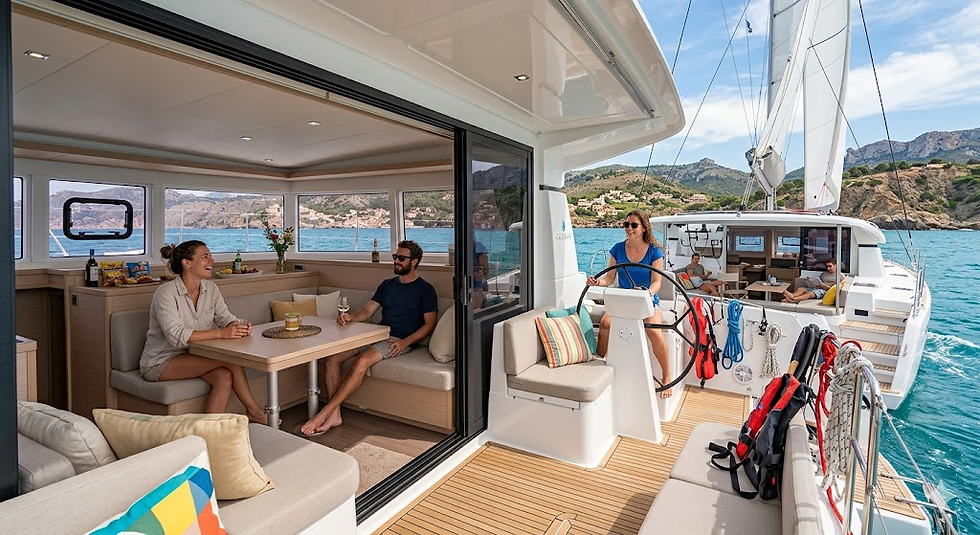
One of the defining features of the Lagoon layout is its “in-and-out” living configuration, where salon and cockpit spaces connect through large sliding doors to create a continuous social area.
That design improves:
Ventilation
Visibility
Group interaction
Meal preparation workflow
Interior natural light
For sailors evaluating cruising comfort, the Lagoon platform often appeals because it balances:
Stable handling
Efficient deck movement
Manageable sail systems
Liveaboard practicality
Coastal cruising capability
A typical Catamaran La Paz search often reflects interest in these exact characteristics rather than purely luxury-oriented yachting.
Catalina 30: Entry-Level Keelboat Training Platform
Not every sailor begins aboard a 45-foot liveaboard cruiser.
The Catalina 30 remains one of the most recognized production sailboats ever built and continues to function as a strong introductory training platform.
Catalina 30 Specifications
Specification | Details |
Hull Type | Fin keel monohull |
Rig Type | Masthead sloop |
Length Overall | 29.9 ft |
Beam | 10.8 ft |
Draft | 5.25 ft |
Sail Area | Approx. 446 sq ft |
Construction | Fiberglass |
Electronics | Chart plotter, VHF, depth meters |
Sail Plan | Self-furling 145 genoa |
Originally designed as a practical coastal cruiser, the Catalina 30 became one of the most successful production sailboats in sailing history because of its approachable handling characteristics and versatile layout.
In instructional settings, the Catalina platform works especially well for:
ASA 101
ASA 103
Docking fundamentals
Sail trim practice
Introductory keelboat handling
Compared to larger liveaboard vessels, smaller monohulls help students feel sail balance changes more directly while remaining less intimidating operationally.

Comparing Vessel Types in La Paz
One reason Sailboats La Paz behaves like a commercial discovery keyword is because sailors are actively comparing platforms before committing to future cruising paths.
Monohull vs Catamaran Comparison
Category | Monohull | Catamaran |
Sailing Feel | More responsive | More stable |
Heel Under Sail | Higher | Minimal |
Docking | Traditional | Twin-engine maneuverability |
Cabin Space | Compact efficiency | Larger layouts |
Anchorage Comfort | Moderate | Excellent |
Beginner Comfort | Moderate | High |
Sail Feedback | Direct | Softer response |
Shallow Water Access | Moderate | Better |
There is no universal “best” option.
Instead:
Monohulls often suit sailors wanting stronger sail feedback and traditional cruising dynamics
Catamarans often suit sailors prioritizing comfort, stability, and extended time aboard
Many intermediate sailors eventually train on both.

Typical Cruising Systems Found Onboard
Modern cruising sailboats in La Paz increasingly resemble self-contained mobile living environments.
Common onboard systems include:
Navigation & Electronics
GPS chartplotters
Autopilot systems
Wind instrumentation
Depth sounders
VHF communication systems
Liveaboard Systems
Refrigeration
Hot water systems
Full galleys
Marine heads and showers
Battery charging systems
Recreation Equipment
Dinghies
Paddleboards
Snorkeling equipment
Swim platforms
Kayaks
Some vessels also include satellite internet systems, allowing remote work and extended coastal itineraries without losing connectivity.

Which Sailboat Fits Different Sailing Goals?
Sailing Goal | Recommended Platform |
First sailing experience | Catalina 30 |
Traditional coastal cruising skills | Dufour 455 |
Family liveaboard comfort | Lagoon 38 |
ASA 114 catamaran certification | Fountaine Pajot 45 |
Bareboat charter preparation | Dufour 455 |
Stability-focused learning | Catamaran fleet |
Docking and sail trim basics | Catalina 30 |
This type of platform matching has become increasingly important because many sailors now approach training with long-term cruising objectives already in mind.
Some intend to charter internationally. Others want future ownership experience. Many simply want to understand which vessel category fits their lifestyle before investing further.

Why These Sailboats Work Well in the Sea of Cortez
The Sea of Cortez offers conditions particularly suited for coastal cruising progression.
Typical regional characteristics include:
Protected bays
Moderate seasonal wind patterns
Short island passages
Warm-weather anchorages
Excellent visibility for navigation practice
These conditions support:
Sail trim repetition
Anchoring drills
Coastal navigation
Docking practice
Multi-day liveaboard routines
For sailors researching a future sea of cortez sailboat charter, exposure to operational cruising boats in these waters often becomes an important confidence-building step before independent chartering.
Liveaboard Cruising and Skill Development
One major reason interest in Sailboats La Paz continues expanding is because liveaboard instruction compresses learning into real-world repetition.
Instead of practicing isolated maneuvers for a few hours, crews experience:
Overnight anchoring
Provisioning management
Weather decisions
Navigation planning
Sail handling under changing conditions
Crew coordination
Systems management
That immersion creates a much stronger connection between theoretical sailing knowledge and actual cruising behavior.
Near the end of their research process, many sailors naturally narrow their attention toward fleets operating fully equipped cruising platforms with established regional knowledge and liveaboard-focused instruction. Go Baja Sailing, based at Marina Costa Baja, Costa Baja, 23010 La Paz, B.C.S., Mexico, and reachable at +52 612 100 5751, is one example frequently associated with this style of training because its fleet structure includes both monohull and catamaran pathways designed around real coastal cruising rather than dockside-only instruction.
That is ultimately why interest surrounding Sailboats La Paz continues to behave more like a fleet comparison search than a traditional tourism keyword. People are not simply searching for a destination.
They are searching for the right sailing platform to grow into the next stage of cruising experience.
Closer to that transition point, organizations like Go Baja Sailing often become part of the conversation naturally because they operate within the same ecosystem of liveaboard education, coastal cruising preparation, and Sea of Cortez sailing culture.

FAQ
What types of sailboats are most common in La Paz?
Cruising monohulls and catamarans between 30 and 45 feet are commonly used for liveaboard sailing, ASA certification programs, and coastal cruising instruction.
Is a catamaran or monohull better for beginners?
Catamarans generally provide greater stability and onboard comfort, while monohulls offer stronger sail feedback and traditional sailing dynamics.
Why is the Dufour 455 popular for training?
The Dufour 455 combines cruising systems, liveaboard accommodations, dual helm control, and responsive sail handling suited for ASA 101–104 progression.
What makes the Lagoon 38 attractive for cruising?
The Lagoon 38 emphasizes connected indoor-outdoor living space, stable handling, efficient layouts, and manageable coastal cruising systems.
Why do sailors choose liveaboard instruction?
Liveaboard sailing exposes crews to navigation, anchoring, provisioning, docking, and overnight cruising routines in real operating conditions rather than short harbor sessions.
Explore Liveaboard Sailing Possibilities
Go Baja Sailing Marina Costa Baja Costa Baja, 23010 La Paz, B.C.S., Mexico +52 612 100 5751


Comments